Manitoba Métis Federation • In progress 2026
Métis Veterans Legacy Program Website
A public website for the program that recognizes WWII Métis Veterans. A Next.js front end on top of a Strapi CMS, so program staff can publish news, recipient profiles, and commemoration projects without a developer.
- Role
- Sole developer
- Timeline
- Started June 2026, on a staging domain ahead of launch
- Team
- Solo, with the program's staff as content owners
- Stack
- Next.js 16, React 19, Strapi 5, TipTap, Tailwind 4
Context
The Métis Veterans Legacy Program recognizes Métis Veterans who served in the Second World War. It runs two things, a one-time recognition payment for veterans and their families, and a commemoration program that funds projects honouring them. The website is how families find out they qualify and how communities see what the program does.
The old site was on WordPress, and every change went through someone who knew WordPress. The program wanted to post news, add recipient profiles, and put up commemoration projects on their own, and they wanted it to look like it was made this decade. I'm the developer in the Manitoba Métis Federation's IT department, so it came to me.
Problem
Three kinds of content, three different shapes.
- News articles with a header image, an author, a category, and a body someone non-technical has to be able to write.
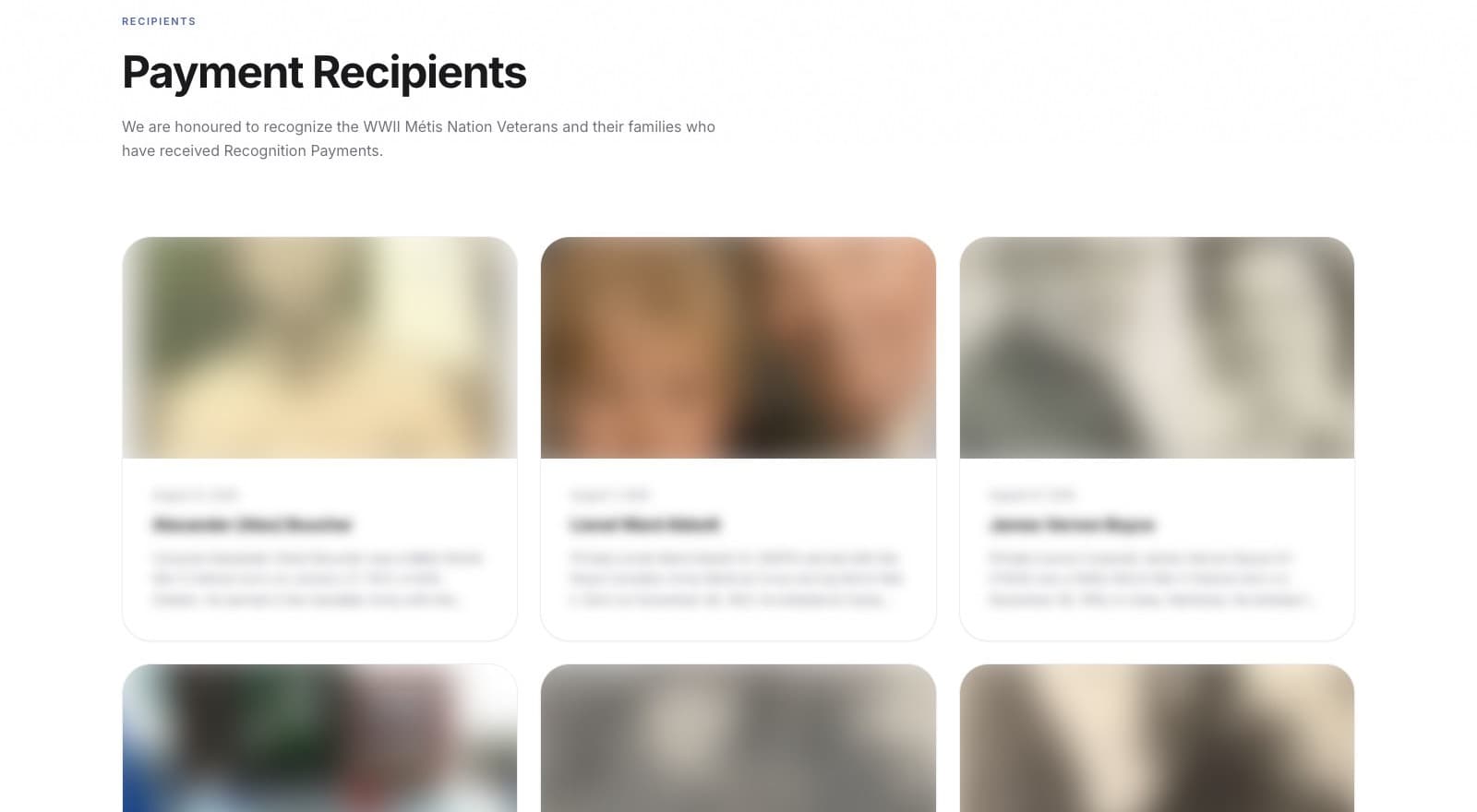
- Recipient profiles, with the veteran's name, a bio, a list of survivors and beneficiaries, and photos from the ceremony.
- Commemoration projects, with a title, a banner, project photos, a summary, and whatever extra the funded group wants to add.
The static pages about eligibility, how to apply, and the commission could stay in code. Everything that changes month to month had to be editable by staff, with drafts, and without me.
Approach
- Next.js 16
- React 19
- Strapi 5
- TipTap
- Tailwind 4
- Motion
I split it in two, a Strapi 5 backend that holds the content, and a Next.js 16 front end that reads from it.
The CMS. Four collection types, articles, categories, commemoration programs, and recognition payments. Articles, programs, and recipients all have draft and publish, so staff can get something ready and put it live later. Rich text uses a TipTap editor plugin instead of Strapi's default, with one preset that gives staff headings, lists, links, alignment, and the media library, and nothing else to get lost in. A seed script sets up public read permissions and sample content on first start, so a fresh environment is ready to demo.
Rendering rich text. The editor stores documents as ProseMirror JSON. I wrote a small renderer that turns that into HTML on the server with no DOM dependency, then runs it through DOMPurify before it hits the page. Paragraphs, headings, lists, links, alignment, and marks are all handled explicitly, so what staff see in the editor is what shows up.
The front end. Next.js with the App Router, server components fetching from Strapi, and dynamic routes for each article, recipient, and project. Strapi relations are populated by name rather than with a wildcard, because a wildcard populate breaks on custom fields. Header images come from Strapi when there is one and fall back to a local placeholder keyed by the slug, so a card is never empty.
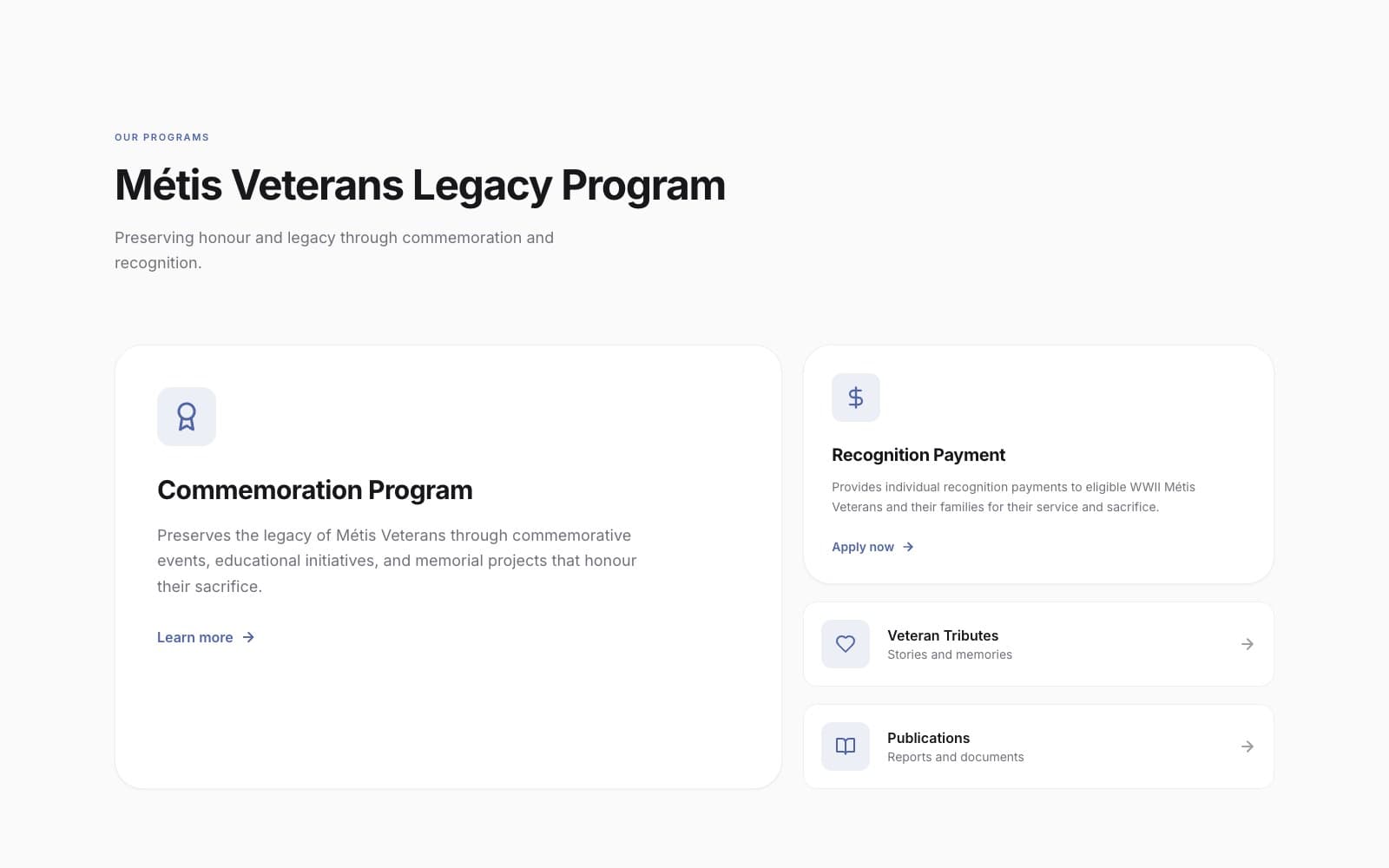
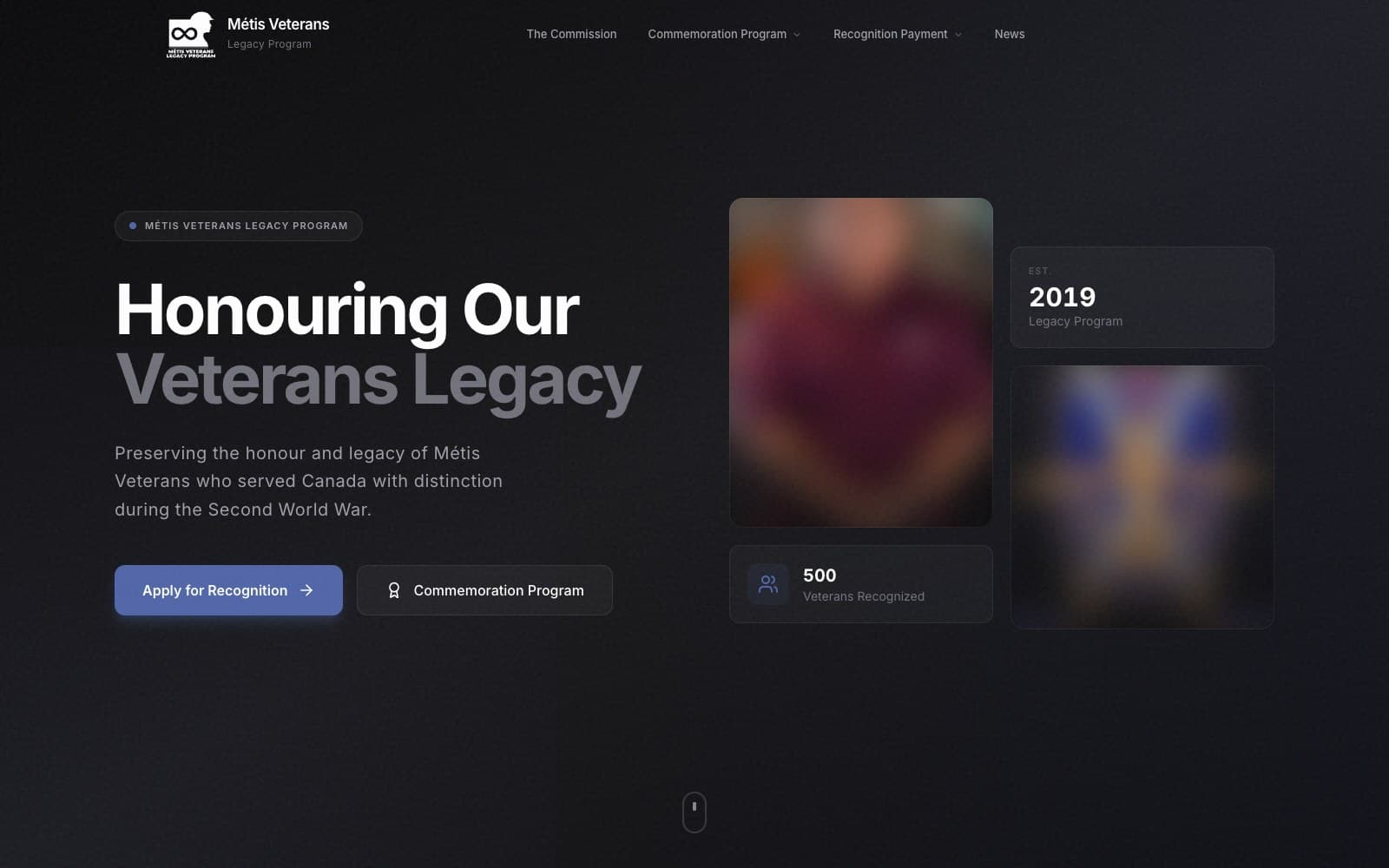
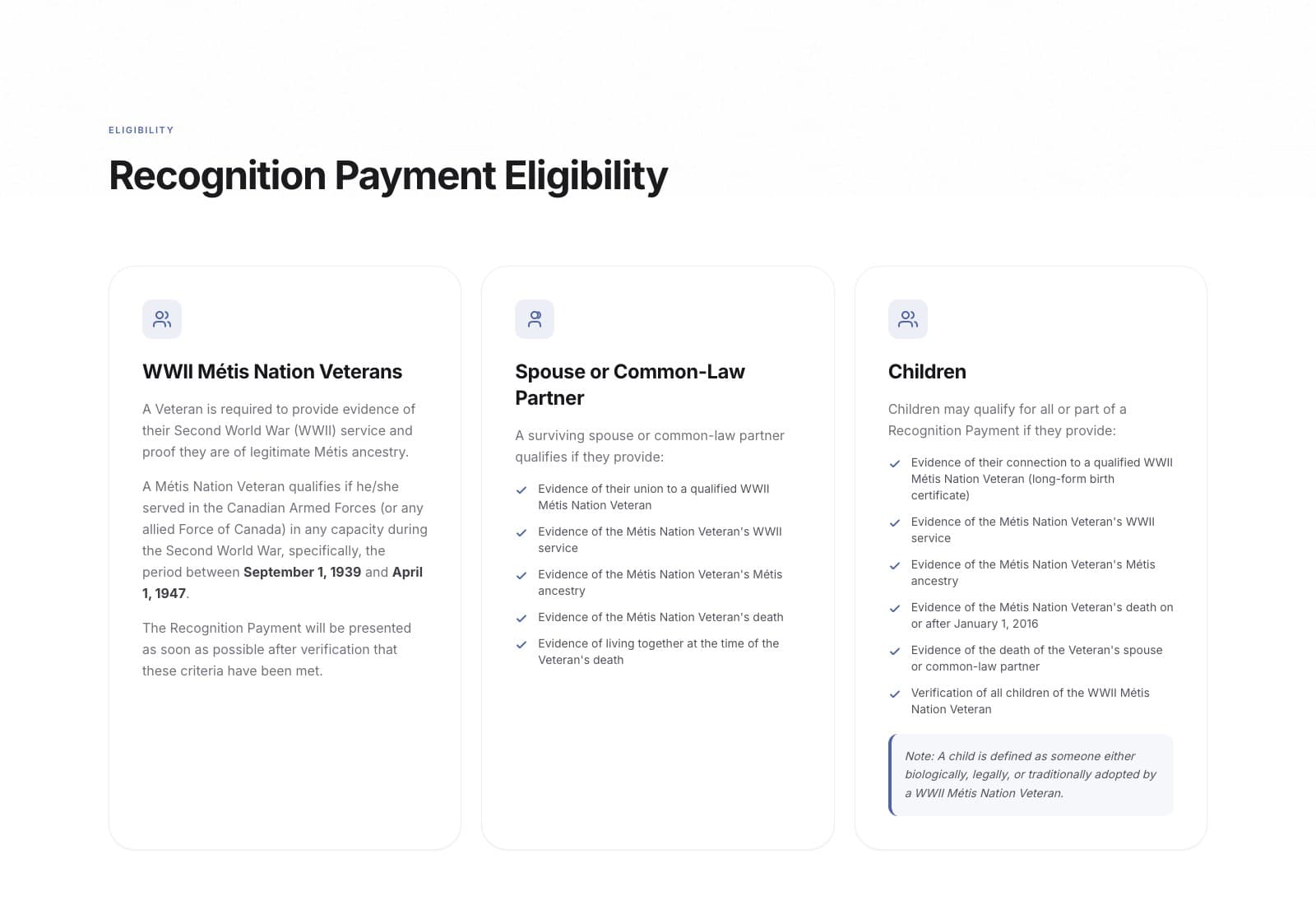
Design. Dark hero sections, a light body, cards with soft borders, and a little motion on scroll, counters that count up, sections that fade in. I wanted it to feel like the program's printed material without copying it. The commission page gives each commissioner a full profile with a portrait, and the eligibility page puts the rules on three cards instead of a wall of text, so a family can actually scan them.

Decisions
- Only the content that changes month to month went into Strapi. Eligibility, how to apply, and the commission stayed in code.
- Rich text is a TipTap plugin with one preset instead of Strapi's default editor, so staff get headings, lists, links, alignment, and the media library, and nothing else to get lost in.
- The editor's ProseMirror JSON is turned into HTML on the server by a small renderer with no DOM dependency, then run through DOMPurify, so what staff see in the editor is what shows up.
- Relations are populated by name instead of a wildcard, because a wildcard populate breaks on custom fields.
- A card with no header image falls back to a local placeholder keyed by the slug, so a card is never empty.
- A seed script sets public read permissions and sample content on first start, so a fresh environment is ready to demo.
Outcome
It's live on a staging domain with real content, over a dozen recipient profiles that program staff published themselves through the CMS, the commission, and both program pages. It moves to its permanent domain when the program is ready to announce it. Staff can post a news story or add a recipient without asking me.